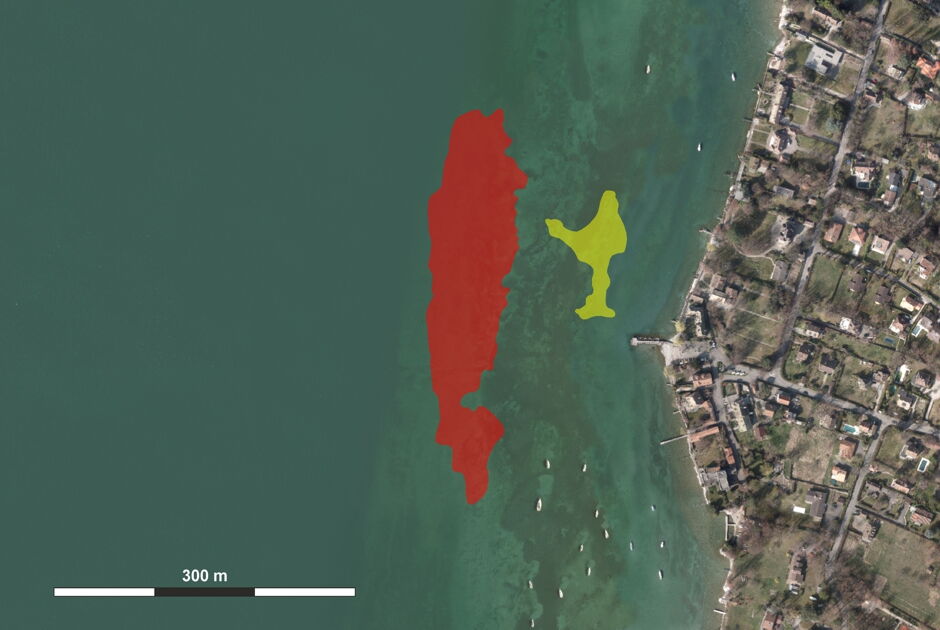
CH-GE-01
Collonge Bellerive, | Bellerive
Short Description
This vast station covers an area of 390 x 95 m, at a depth of more than 3 m. The archaeological layer is very well preserved and can be observed over an area of approximately 200 m. It is limited to the outermost part of the site. The piles are densely packed, as is the archaeological material, visible in the erosion front of the anthropogenic layer. A tenebria (a man-made pebble beach) is present throughout the archaeological areas. The archaeological layer slopes down towards the sea in three levels. The conservation of the piles and layers is much better towards the lake than towards the shore. A second, smaller and heavily eroded site is located near the shore (Bellerive II). It dates from the late Neolithic period.
Please find more details in the Dictionnaire historique de la Suisse DHS
Special Features & Highlights
It is the best-preserved Late Bronze Age pile dwelling site on the Swiss shore of the Petit-Lac. It stretches along the eastern shore, about 170 metres from the water's edge, near the Bellerive landing stage.
Pile Dwellings up close
Archaeological objects collected from sites on the Geneva shores of Lake Geneva are on display at the Geneva Museum of Art and History.
Musée d’art et d’histoire
Rue Charles-Galland 2
1206 Genève
+41 22 418 26 00
au site web

Bronze Age
Late Bronze Age, between 998 and 880 B.C.
Lake Geneva
367-369 m.a.s.l.
Size of the site:
2,40 ha / approx. 3 football pitches
Size of the bufferzone:
13,50 ha / approx. 19 football pitches
