


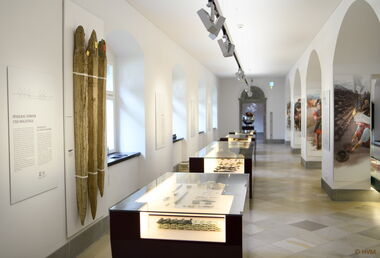
exhibitions & mediation spaces
Numerous museums, collections, infopoints, reconstructions, educational trails and other mediation spaces display finds and information from pile-dwelling sites. They make the World Heritage Property accessible to everyone without jeopardising the sensitive sites themselves.
There is sure to be a mediation space near you.
Please note that some facilities have irregular opening hours. Further information on this and on activities such as guided tours for adults and schoolchildren or experimental demonstrations can be found on the respective website.
Carinthia
Gemeindeamt Keutschach

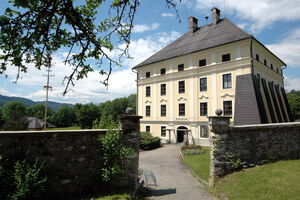
At the end of the 1970s, divers from the Keutschach Water Rescue Service recovered several objects from the pile dwelling settlement in Lake Keutschach. The most beautiful finds were displayed in a small showcase in Keutschach Castle until 2022, when the ‘World Heritage Window’, an interactive and modern showcase, was opened in the Keutschach municipal office. In addition to the original pieces, it also offers information about the Keutschach pile dwellings.
Objects in 3D are accessible by following this link: Kompass Project
Keutschach 1
9074 Keutschach am See
kärnten.museum
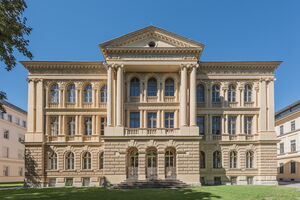
The collections of the kärnten.museum originate from the collecting activities of the Historical Society for Carinthia (1844), the Natural Science Society for Carinthia (1848) and the Carinthian Landsmannschaft. Since 1884, the collections have been housed together in the kärnten.museum in Klagenfurt, which was ceremoniously reopened in 2019 after extensive renovation work.
All of the kärnten.museum's collections, from archaeology to zoology, have been rearranged across a total area of 4,000 m². The collections of the kärnten.museum comprise more than 2 million objects, ranging from millimetre-sized insects to 18 m² panoramic paintings. Of course, this collection also includes many objects from Carinthia's only UNESCO World Heritage Site, the prehistoric pile dwelling settlement in Lake Keutschach.
Objects in 3D are accessible by following this link: Kompass Project
SWZ, Liberogasse 6
9020 Klagenfurt am Wörthersee
Upper Austria
Heimathaus Schörfling

The Schörfling Heritage House is located in a 500-year-old building opposite the parish church and is listed in the foundation records as the ‘Gassaurisches Stiftungshaus’ (Gassaur Foundation House). In 1990, the Schörfling Association for Local History and Prehistory (now the Schörfling Heritage House Association) was given the opportunity to set up a museum, which was expanded in 1994 and opened to the public. The Schörfling Heritage House offers an exciting journey through time, from a collection on pile dwelling culture to the first mention of Schörfling in 803 AD and the devastating fire of 1787 to the Second World War. It houses finds, implements, tools and everyday objects, as well as numerous photos documenting all aspects of the history of the village and the surrounding area, such as customs, art, crafts and trades.
Objects in 3D are accessible by following this link: Kompass Project
Gmunderstraße 8
4861 Schörfling am Attersee
Heimathaus Vöcklabruck
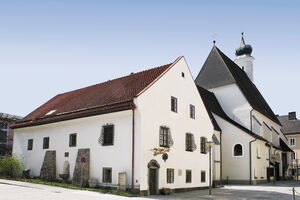
Opened in 1937, the Vöcklabruck Local History Museum is located in one of the oldest buildings in the town, the Benefiziatenhaus next to the parish church, which dates back to the 15th century.
The museum shows life in the Vöcklabruck area: Roman mosaics, rural and urban living and working conditions, town history from the 8th century onwards, Christian artworks, the guild system, the Biedermeier period and lots of interesting facts about Anton Bruckner. The beginnings of settlement in the region are represented by numerous finds from Upper Austrian pile dwellings, supplemented by reconstructions and educational material.
Objects in 3D are accessible by following this link: Kompass Project
Hinterstadt 19
5310 Vöcklabruck
Infopavillon Attersee

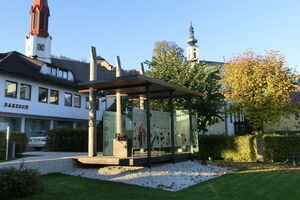
The pile dwelling pavilion in Attersee am Attersee invites visitors to enjoy a panoramic view of the prehistoric landscape and life in four seasons. Visitors can explore their own surroundings from the perspective of a resident of the pile dwellings.
The World Heritage Sites Abtsdorf I and III are located near the Attersee Pavilion. The Abtsdorf I pile dwelling settlement can be dated to the transition from the Early to the Middle Bronze Age. It is the only pile dwelling settlement in Austria with a verified C-14 date from this period. Neolithic finds from this settlement area, but also from the Abtsdorf III station, suggest that the area was settled in several phases. The prehistoric human remains hidden here under water could therefore represent an important link between the Neolithic and Bronze Age settlements in the region. Thanks to sufficient sediment cover, the settlements are in a good state of preservation.
Park / nördliche Promenade
4864 Attersee am Attersee
Infopavillon Mondsee
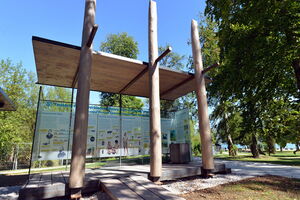
The pile dwelling pavilion in Mondsee presents the scientific view of the phenomenon of pile dwellings. The exceptional preservation conditions of these underwater archaeological sites have not only made the pile dwellings a UNESCO World Heritage Site, but also an ideal case study for scientific research into our past.
The Lake Mondsee pile dwelling site is located in the immediate vicinity of the lake's outlet, the Seeache, and a weir built there in the 1970s. This led to local flooding in the peripheral area of the settlement. In order to prevent further erosion of the lake-facing boundaries of the pile dwelling site, a package of measures (e.g. a protective fence and covering with geotextiles) is being developed and will be implemented starting in 2012.
The Mondsee Group settlement is not only of extraordinary value from a research history perspective. Extensive investigations by local historian Matthäus Much have unearthed a particularly rich collection of finds from the Neolithic period. So extensive, in fact, that the regionally widespread Mondsee Group was named after this site. The diverse inventory of finds from the settlement represents the most complete source to date in the scientific study of Austrian pile dwelling cultures.
Almeidapark
5310 Mondsee
Infopavillon Seewalchen
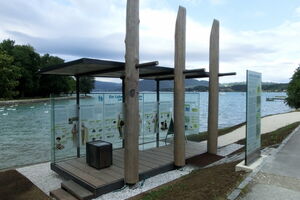
The pile dwelling pavilion in Seewalchen am Attersee allows visitors to slip into the role of a prehistoric human and explore their own actions and behaviour. A day in the life by the lake offers many new insights into the not-so-wild people of the Stone and Bronze Ages.
The Litzlberg World Heritage Site is one of Austria's pile dwelling settlements with the best-preserved cultural layer. The massive cultural layer packages and the very good coverage of the site offer the best conditions for a rich spectrum of finds and are particularly important for understanding small-scale development processes.
Ecke Agerbrücke / Promenade
4863 Seewalchen am Attersee
Museum Mondsee
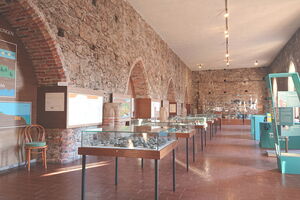
In 1953, after a long-cherished wish for a local history museum, the Mondsee Museum was established in the collegiate church. Today it is located in the former monastery library. The museum focuses on the history of the monastery and the folk culture of the Mondsee region, as well as its history. The finds from the Neolithic Mondsee group in particular form a central part of the exhibition. The history of the pile dwelling culture of the Mondsee region is presented in an exhibition area covering more than 400 m².
Objects in 3D are accessible by following this link: Kompass Project
Wredeplatz 1
5310 Mondsee
Oberösterreichische Landes-Kultur GmbH
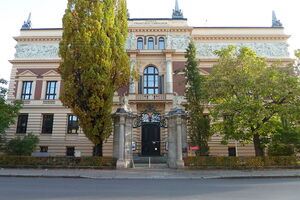
The former Upper Austrian Provincial Museums, known as OÖ Landes-Kultur GmbH since 2020, is a cultural institution of the Province of Upper Austria. The natural and cultural history of the region is on display at the Linz Castle Museum. Since 2015, the institution has been a partner of the Lake Dwelling Board of Trustees in the ‘Zeitensprung’ research project and is responsible, among other things, for the care and storage of the finds.
Objects in 3D are accessible by following this link: Kompass project
Museumsstraße 14
4010 Linz
Vienna
Naturhistorisches Museum Wien
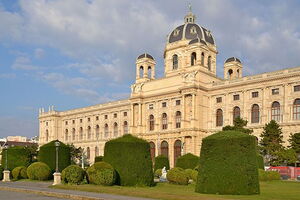
The history of the Natural History Museum's collection dates back to 1750. Emperor Franz I Stephan of Lorraine laid the foundation for today's Natural History Museum with 30,000 objects, which now has approximately 30 million items in its collection. Around one million of these belong to the Prehistoric Collection.
Ferdinand von Hochstetter, who discovered Austria's oldest pile dwelling settlement in Lake Keutschach, was also the first director of the museum in its present form in the 19th century. Pile dwelling research in Austria has therefore been linked to the Natural History Museum since its inception.
Objects in 3D are accessible by following link: Kompass Project
Burgring 7
1010 Wien
Universität Wien – Studiensammlung des Instituts für Urgeschichte
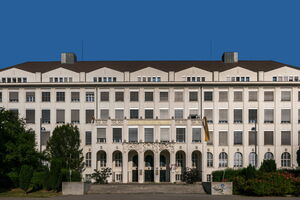
Since 1899, the Institute for Prehistory and Historical Archaeology has maintained a study collection that has been continuously expanded through donations and acquisitions. With over 90,000 artefacts, it is one of the largest and most comprehensive prehistoric and early historical study collections in European universities. The majority of the objects come from European countries. Within Europe, Austria and the former crown lands are most strongly represented, including sites that gave their names to cultural groups such as Stillfried, Hallstatt and Mondsee. The important pile dwelling collection comes from the estate of Matthäus Much, discoverer of the See am Mondsee settlement.
In addition to collecting and preserving, the main tasks of the study collection are research and teaching. It enables intensive, primarily comparative study of numerous objects and object groups across individual cultural periods.
Objects in 3D are accessible by following this link: Kompass Project
Franz-Klein-Gasse 1
1190 Wien
Isère
Musée archéologique du lac de Paladru MALP
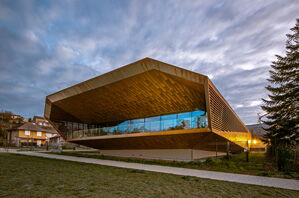
The Malp showcases the archaeological research that has been conducted in the depths of Lac de Paladru since the beginning of the 20th century. The exhibition highlights two pile dwelling settlements in particular: the Neolithic settlement of "Les Baigneurs" and the medieval settlement of "Colletière". Archaeological objects from both periods are presented in an immersive tour, while underwater excavations, climate change and the archaeological context of the two periods are explored using multimedia and video equipment.
rue du musée 15
38850 Les Villages du lac de Paladru
Jura
Musée Archéologique de Champagnole

6,000 years ago, over a period of around 2,000 years, groups arriving gradually from the east and south established their villages on the shores of Lakes Chalain and Clairvaux.
The excellent state of preservation of the remains in the lake chalk deposits enables archaeologists and palaeoecologists to study in detail the everyday life of the first Neolithic farming communities in the Jura.
The Champagnole Museum showcases the inestimable wealth of these sites in its new ‘Espace lacustre’. Information panels, replicas and the museum’s collections form a permanent exhibition aimed at a wide audience.
Practical information
Access to the first floor via an external staircase
For visitors with reduced mobility: access to part of the museum via the lift is available during the library’s opening hours
Museum shop and library
Toilets nearby
Rue Baronne Delort 26
39300 Champagnole
Paris
Musée d'Archéologie Nationale MAN
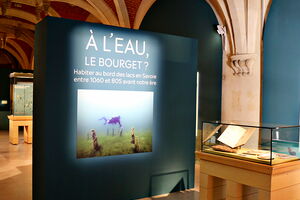
« À l’eau, Le Bourget ? »
An unsinkable exhibition on digital stilts at the National Archaeology Museum – National Estate of Saint-Germain-en-Laye
In 2021, to mark France's presidency of the IGC for prehistoric pile dwellings in the Alpine region, the National Archaeology Museum (MAN) wanted to showcase the collections and archives from Lac du Bourget (Savoie). From 9 June to 9 August 2021, nearly 200 objects, most of which came from the MAN's old collections but also from the Musée Savoisien (Savoie department) and recent excavations carried out by the Department of Underwater and Underwater Archaeological Research of the Ministry of Culture (DRASSM), were exhibited. A rich documentary file available online, produced in collaboration with the DRASSM (Yves Billaud) and the Musée Savoisien (Audrey Roche), as well as a booklet for visitors, were designed for the occasion.
Pl. Charles de Gaulle
78100 Saint-Germain-en-Laye
Savoy
Musée Lac & Nature
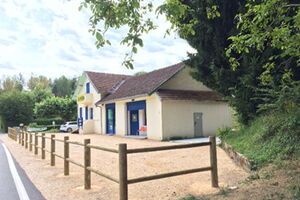
The Lac et Nature museum is a didactic facility that introduces the visitors to the fragile balance of the lake. The museum was built step by step by FAPLA (Fédération des Associations de Protection du Lac d'Aiguebelette) and offers the best opportunity to convey the natural, biological and cultural heritage of Lake Aiguebelette.
Route des plages 996
73470 Novalaise
Upper Savoy
Maison du Lac d'Aiguebelette
The Maison du Lac displays the whole Lake Aiguebelette in a vibrant and cosy ambience. The show area allows you to dive into a unique and protected sphere where each of the seasons reveal their secrets. In your interactive visit, you will be discovering the uniqueness of our environment and the people that lived in, protected, made history in it and worked on its future.
Route d'Aiguebelette 572
73470 Nances
Musée-Château d'Annecy - Observatoire régional des Lacs Alpins (ORLA)
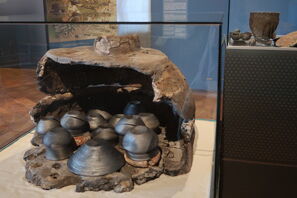
The Musée-Château d'Annecy carries an important collection found in pile dwellings during the inspections and archaeological surveys from the 19th to the 21st century. In the centre of the exhibition are Lake Annecy, Lake Bourget and Lake Geneva, as well as important discovery sites like Robenhausen on Lake Pfäffikon. The permanent exhibition in two rooms shows the environment in the New Stone Age and Copper Age, as well as everyday objects and the oven of Crêt de Châtillon in Sevrier (Haute-Savoie).
place du Château
74000 Annecy
Baden Württemberg
Archäologisches Landesmuseum, ALM
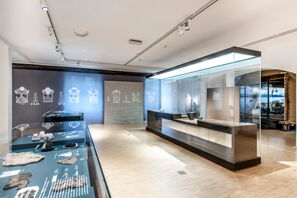
At the Archäologisches Landesmuseum , 3,000 square metres are dedicated to display diverse aspects of Baden-Württemberg's archaeology. In addition to changing special exhibitions, visitors can look forward to a large permanent exhibition, including one on the "World of the pile dwellers" with sensational objects from the UNESCO World Heritage Sites of Lake Constance and Lake Federsee. Organic objects made of wood or plant fibres - textiles, building elements, tools - show the excellent state of conservation in the pile dwelling settlements. The reconstruction of the wall of the unique "cult house" of Ludwigshafen with seven life-size stylised female figures is one of the highlights of the exhibition.
Benediktinerplatz 5
78467 Konstanz
Federseemuseum
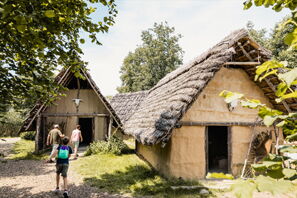
The Federsee Museum offers a classic display case museum with original finds from the World Heritage Sites of Forschner, Alleshausen-Grundwiesen, Alleshausen/Seekirch-Ödenahlen and other sites in the Federsee area. Houses from settlements of different periods have been reconstructed in the open-air area. A wide range of educational activities brings the museum to life.
August Gröber Platz
88422 Bad Buchau
Heimatmuseum Allensbach
The Allensbach Local History Museum displays archaeological finds from the western Lake Constance region. The exhibition focuses on detailed information about the Allensbach-Strandbad World Heritage Site and the famous dagger.
Rathausplatz 2
78476 Allensbach
Museum Biberach

The museum's archaeological collection was founded by Heinrich Forschner (1880-1959), a dentist and archaeology pioneer from Biberach. Finds from the Stone and Bronze Ages, especially from thepile dwelling site "Siedlung Forschner" inscribed as World Heritage form a focal point of the exhibition.
Museumsstraße 6
88400 Biberach an der Riß
Pfahlbauausstellung Dingelsdorf
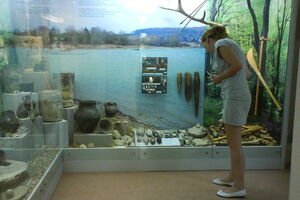
Opened in 2011, the museum uses finds from the Gieß collection to provide a vivid insight into Neolithic settlement on Lake Überlingen. Food and housekeeping are illustrated by grain mills, pottery cooking and storage vessels, and fishing nets, while a variety of stone and wooden tools show how the pile dwellers worked.
Finds from the Palaeolithic Age in Hegau and the Mesolithic Age in Dingelsdorf are also on display. A display case shows themes that change annually.
Rathausplatz 1
78465 Konstanz-Dingelsdorf
Pfahlbaumuseum Unteruhldingen
Strandpromenade 6
88690 Unteruhldingen-Mühlhofen
Bayern
Archäologische Staatssammlung München

The State Archaeological Collection, founded in 1885, is the archaeological museum of the Free State of Bavaria. In addition to many other central objects from 100,000 years of human history, finds from the three World Heritage Sites of Rose Island, Pestenacker and Unfriedshausen are kept and exhibited here.
Lerchenfeldstr. 2
80538 München
Steinzeitdorf Pestenacker
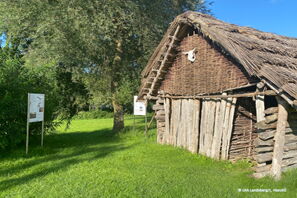
The Stone Age village Pestenacker demonstrates vivid history you can discover and participate in. Modelled after a prehistoric settlement discovered in 1934, the Stone Age village is being extended and further professionalised. A byre-dwelling from the New Stone Age, reconstructed in its original size, is waiting for your visit. In the Stone Age garden, it is time for a discovery tour of cereal crops and herbs. The Stone Age bee houses show how our ancestors were harvesting honey 5500 years ago and regularly baked bread in the Stone Age clay oven. In the visitor's pavilion, you can discover tools, weapons, ceramics and fabrics as in the New Stone Age.
Hauptstr. 100
86947 Weil – Ortsteil Pestenacker
Lombardy
Museo "Andrea Ponti"
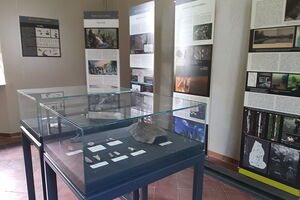
The museum was created in 1884 by Andrea Ponti, owner of Isolino Virginia and patron of research, in two rooms of the existing building in the centre of the island to collect materials found in the pile-dwelling sites in the Varese area. It was refurbished in 2020 and houses, in addition to a film and a series of artefacts illustrating the site's thousand-year history, a room in which the interior of a Neolithic dwelling has been reconstructed, with reproductions of objects and environments.
Loc. Strencia
21024 Biandronno (VA)
Museo Archeologico della Valle Sabbia MAVS
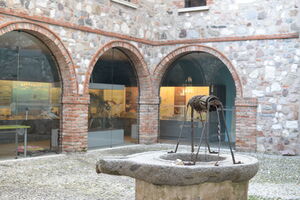
The Museum, housed in an ancient building (13th-15th century), offers the visitor a picture of the history of the Sabbia Valley and the western Garda area from the Middle Palaeolithic to the Renaissance period, with a focus on the important Bronze Age pile-dwelling site of Lucone di Polpenazze. Thanks to the particular environmental conditions, many finds in organic material come from the site, such as wooden sickles and linen fabrics.
Piazzetta San Bernardino 5
25085 Gavardo
Museo Archeologico Platina
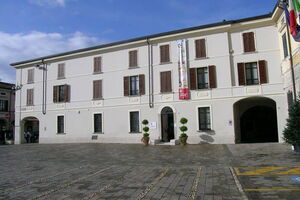
The Platina Museum, housed in a 16th century convent, shows to the visitor the archaeological artifacts found in an area rich in history. From the Early Neolithic sites of the Vho di PiadenaCulture, to the great sites of the Bronze Age such as the important pile dwellingLagazzi del Vho. There are also rich collections concerning the Celts, the Roman period with the site of Bedriacum and the Early Middle Ages.
Piazza Garibaldi 3
26034 Piadena Drizzona
Museo Civico Archeologico „G. Rambotti“
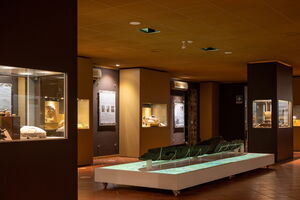
The Museum, inaugurated in 1990, is named after Giovanni Rambotti, the first mayor of Desenzano in 1860. He was the first to recognize the scientific and archaeological value of the prehistoric finds discovered in the area of Lake Garda. The museum was founded to show the wealth of archaeological evidence in the Desenzano area, focusing on the prehistory of Lake Garda and the pile dwellings of Lavagnone. The exhibition have been completed with materials spanning from the Roman age to the Renaissance and up to the domination of the Republic of Venice.
via Anelli 42
25015 Desenzano del Garda (BS)
Trentino
Museo delle Palafitte di Fiavé

A fascinating journey through time, diving into the past, into the atmosphere of the pile-dwelling village of Fiavé to experience the life of our Bronze Age ancestors. Between Lake Garda and the Brenta Dolomites, in Fiavé, in the Valli Giudicarie, where once was the ancient Carera Lake, the Archeo Nature Park rises today, in an environment of great value. A path of discovery and knowledge in the evocative scenery of the nature reserve, a few dozen metres from the archaeological area, included by UNESCO in the World Heritage List, where the remains of the posts that supported the prehistoric buildings are still visible. The Archeo Nature Park and the archaeological area, together with the Pile dwelling Museum in the village of Fiavé, form a true archaeological compound, full of surprises for visitors of all ages. All this is an invitation to adventure and exploration of the past along an engaging route with full-scale reconstruction of the prehistoric buildings, installations illustrating life at the time of the pile dwellings, information panels, a visitor centre with films and multimedia equipment, rest areas as well as spaces dedicated to families and children.
Admission fees (fees include admission to the Museo delle Palafitte): adults € 7; reduced fee € 5; free admission under 14 years old, affiliated with Trentino Guest Card
Loc. Doss-Torbiera
38075 Fiavé (TN)
Museo delle Palafitte Lago di Ledro

Since its opening in 1972, the Museo delle Palafitte del Lago di Ledro has been collecting and displaying finds discovered during the numerous excavation campaigns that have explored the eastern lake shore since 1929. The finds are part of the remains of a Bronze Age pile-dwelling village (2200–1350 BC). Since summer 2019, the museum, which is part of the MUSE network of science museums and coordinates the Ledro Museum Network, has a completely new appearance. Throughout the year, the museum offers workshops and activities for schools. Palafittando® is the summer programme of performances, concerts and workshops on experimental archaeology that offers visitors a summer of encounters between the past and the present. Through its research and the involvement of local actors, the museum becomes a place of cultural, economic and social development and encounters.
Via al lago 1
38067 Ledro (TN)
Veneto
Museo Nazionale Atestino

The museum carries the most important archaeological finds of the Venetians, who lived in this region during the 1st millennium BC. The Roman section shows the transformation of the city of Ateste between the 1st century BC and the 2nd century AD. Smaller but important parts of the exhibition are dedicated to the prehistory of the Euganean Hills – especially the pile-dwelling site of Laghetto della Costa di Arquà – and the post-antique period.
Via G. Negri 9/c
35042 Este (PD)
Central Slovenia
Morostig – House of nature and piles
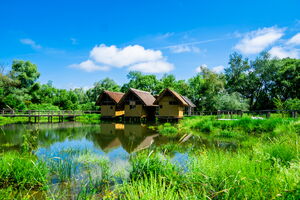
Morostig, House of nature and piles, is a modern interpretation center on the Ljubljana Marshes, where archaeology, nature, and storytelling meet. It includes an indoor exhibition and a reconstructed pile-dwelling site, connected by a thematic trail through the marsh. Through exhibits, workshops, and outdoor experiences, visitors explore the world of prehistoric pile dwellers and the unique marshland ecosystem. It is a perfect destination for families, schools, and heritage enthusiasts.
Govekarjeva cesta 5
1292 Ig
Osrednja Slovenija
Museum and Galleries of Ljubljana MGML
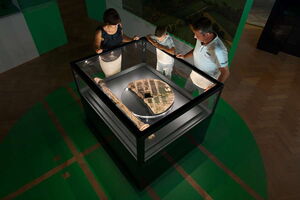
MGML is the largest public institution established by the City Municipality of Ljubljana. MGML showcases a rich movable heritage and is dedicated to presenting contemporary domestic and international visual art. The dynamic and current museum and gallery offerings ensure continuous engagement with both local and international visitors, popularize collections, and provide a modern perspective on the rich artistic creation in Slovenia's capital.
Gosposka ulica 15
1000 Ljubljana
Narodni muzej Slovenije / National museum of Slovenia
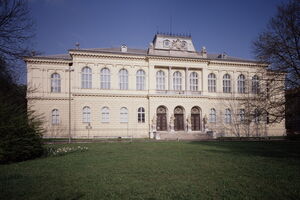
The National Museum of Slovenia NMS is the central state museum for archaeological, numismatic, historical, and art-historical heritage in Slovenia. The museum's mission is to present this heritage to both experts and the general public through permanent and temporary exhibitions, professional and popular publications, lectures, electronic media, and the internet.
Of exceptional importance in the NMS is the prehistoric collection, in which pile dwellings (Dežman's pile dwellings near Ig, the pile dwellings of Notranja Gorica and Blatna Brezovica) and Iron Age finds occupy an important place.
Prešernova 20
1000 Ljubljana
Aargau
Museum Burghalde
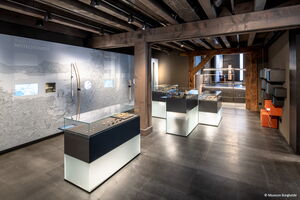
The permanent exhibition with big pictures of life, original finds and replicas you can touch presents the history of pile dwellers in the Seetal valley. The exhibition highlight is a 360-degree film where visitors can explore the pile dwelling site under water with an archaeological diver. About 150 school classes enjoy our programmes on the Old and New Stone Age every year. The slogan “Stone Age Experience” invites you to take up work in a prehistoric workshop with replica tools from the pile-dwelling period, try on Stone Age clothing, cook in the museum garden and much more.
Schlossgasse 23
5600 Lenzburg
Bern
Bernisches Historisches Museum BHM
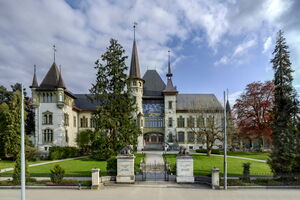
The Bern Historical Museum is one of the most important cultural history museums in Switzerland. Stories of local and global significance invite visitors to engage their minds, hearts and hands. Stone Age excavations, archaeological finds and the Bern Silver Treasure: the Bern Historical Museum is a growing repository of knowledge and experience on the culture and history of Bern – and the world. The collections on history, archaeology and ethnography comprise half a million objects. They offer insights into ways of life from different historical eras and cultural contexts.
Helvetiaplatz 5
3005 Bern
Museum Lüscherz - Sammlung Hans Iseli
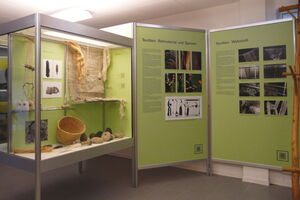
The Museum exhibits an impressive collection amassed by Hans Iseli from Lüscherz. Over the course of 60 years he collected more than 10,000 artefacts made of stone, flint, bone, antler and clay, which document the lives of the pile dwellers that lived around Lake Bienne. The exhibition is housed in the basement of the Municipal Building at Haupstrasse 19 and provides an insight into the lives of early farming communities on Lake Bienne between 4000 and 800 BC.
Hauptstrasse 19
2576 Lüscherz
Musée d'art et d'histoire de La Neuveville
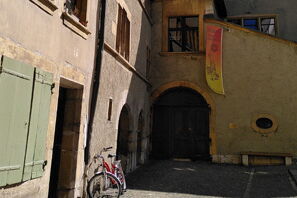
The museum is located in the former town hall and showcases the region's rich history. The Victor Gross Hall displays Neolithic finds from the pile dwellings on Lake Biel and a magnificent logboat. The large hall features trophies from the Burgundian Wars, spoils taken from the troops of Charles the Bold at the Battle of Murten in 1476. The ‘Neuvevilloise’ and ‘Corporations’ rooms, with their 18th-century Landolt stoves, offer an insight into everyday life in La Neuveville.
Ruelle de l'Hôtel de Ville 11
2520 La Neuveville
Freiburg
Museum Murten

The permanent exhibition of the Museum Murten shows a rich array of finds from various pile-dwelling sites on Lake Morat. Vessels, tools, implements of all kinds, jewellery and textiles provide insight into the Neolithic and Bronze Age living environments. The artefacts on display were recovered mainly from the settlements in Muntelier, which were among the best-known prehistoric sites in Western Switzerland.
Ryf 4 4
3280 Murten
Village lacustre de Gletterens
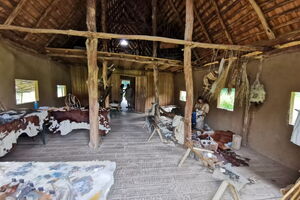
Route des Grèves
1544 Gletterens
Geneva
Musée d'art et d'histoire MAH

The Musée d’art et d’histoire de la Ville de Genève houses almost 47,000 prehistoric finds. Several thousand came from pile-dwelling sites around the lower basin of Lake Geneva and date from both the Late Stone Age and the Late Bronze Age. A selection of several dozen artefacts from the sites at Plonjon, Eaux-Vives, Pâquis and Anières-Bassy as well as Collonge-Bellerive and Corsier-Port have been on display in the new regional archaeology hall since 2009. The finds are accompanied by 10th century BC piles from Plonjon and a dugout canoe from Morges, which was recently dated to 1326 BC.
Rue Charles Galland 2 2
1206 Genève
Lucerne
Archäologischer Lehrpfad Wauwilermoos

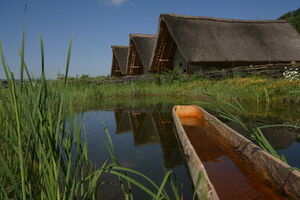
Archaeological trail, pile dwelling settlement and hunter camp
Wauwilermoos is an archaeological landscape of European significance. Since the end of the last ice age, humans have appreciated the advantages of this fertile region around the former Lake Wauwil. The oldest finds known to date date back to around 14,000 BC. Wauwilermoos gained particular fame due to its excellently preserved Neolithic villages (4300 to 2200 BC). Recently, Bronze and Iron Age settlement remains have also been excavated on the edge of the moor.
The archaeological trail consists of seven stations. The starting and ending point is Station 1, which features a reconstruction of a pile dwelling settlement and a hunter's camp, as well as an information pavilion. The tour takes visitors to the most important archaeological sites in Wauwilermoos. One station is dedicated to the UNESCO site Egolzwil 3. It is the oldest known pile dwelling settlement in Switzerland, dating from around 4300 BC. The characteristic pottery found at this site even gave its name to the so-called ‘Egolzwiler culture’.
6242 Wauwil
Archäologisches Museum Schötz
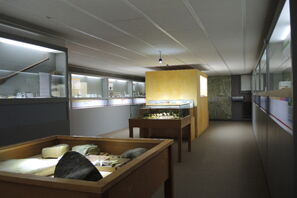
The museum displays interesting archaeological finds from the Wauwiler Plain and the Wiggertal Valley (Stone Age, Bronze Age, Iron Age, Roman period, Middle Ages). The focus is on exclusive finds from Egolzwil 3, an early farming village whose site is a UNESCO World Heritage Site. Interesting landscape reliefs, reconstructions and models provide a good overview of the early settlement of the region.
Oberdorfstrasse (neben der St. Mauritiuskapelle) 2
6247 Schötz
Neuchatel
Laténium - parc et musée d'archéologie
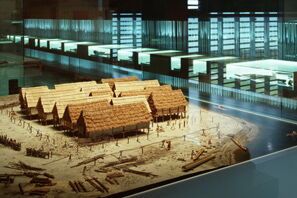
The Laténium is both a scientific research centre and an internationally recognised museum. Nestled in an idyllic setting on the shores of the lake, it invites you to discover the everyday life of our ancestors from the Neanderthal era onwards. In addition to the finds from La Tène, the museum focuses on the pile dwelling era: the Laténium's collections illustrate all the important sites of Swiss pile dwelling archaeology.
Espace Paul Vouga
2068 Hauterive
Schaffhausen
Museum zu Allerheiligen
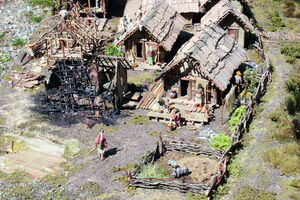
The permanent archaeological exhibition features a settlement model of the bog settlement Thayngen-Weier, which was created on the foundation of the excavation results and scientific investigations. A touch screen on various model topics enables references to settlement features, building history and individual discoveries. At the centre of the presentation of the rich material from the settlement are wooden finds: ladles, bowls and cups in all stages of processing up to the finished product, hatchets, threshing rafters, mashers and various other wooden tools. In connection with new discoveries, clay knobs from the settlement of Weier take on a new significance: women's breasts as applications of clay-covered, painted house walls.
Baumgartenstrasse 6
8200 Schaffhausen
Solothurn
Archäologisches Museum Kanton Solothurn, im Haus der Museen

‘What remains. Stories from the ground’ is a journey through 80,000 years of history. The exhibition shows what life might have been like in earlier times. For example, for the farmers who lived with their children in the village of ‘Burgäschisee Ost’. Panoramic images, accompanied by background sounds, transport visitors back to everyday life 6,000 years ago. On display are finds made of stone, ceramics, bone and wood that remain from this village.
Konradstrasse 7, 4600 Olten, Schweiz 7
4600 Olten
Pächterhaus Museum Blumenstein

The exhibition presents the most beautiful and important archaeological finds from the 2,000-year history of the city of Solothurn. Founded by the Romans, Solothurn remained inhabited beyond antiquity and was also an important centre at the southern foot of the Jura Mountains in the Middle Ages. Some finds from the city and its surroundings are much older and show that settlement in the region dates back to prehistory and early history.
Blumensteinweg 12
4500 Solothurn
St. Gall
Kulturmuseum St. Gallen
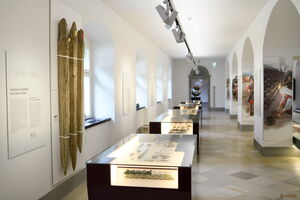
The "Kulturmuseum St. Gallen" has stood in the city park of St. Gallen for over 100 years. As a platform for history, ethnology and archaeology, it radiates far beyond St. Gallen. The permanent archaeological exhibition "Fascinating Archaeology – Treasures from the soil of St. Gallen" invites visitors on a journey through time to over 50,000 years ago. Displayed objects range from the Palaeolithic Age to the rich medieval heritage of the canton and city of St. Gallen. The UNESCO World Heritage sites in Lake Zurich are given an important place.
Museumstrasse 50
9000 St. Gallen
Thurgau
Historisches Museum im Schloss Arbon

The medieval Arbon Castle is home to the largest museum of local and regional history in the Thurgau region. The permanent exhibition invites visitors on an exciting journey through 5500 years of settlement history on Lake Constance. The many original discoveries, documents, models and photos are in some cases supplemented with comparable objects of our time. Climbing the tower is rewarded with a breath-taking panoramic view.
Schloss Arbon
9320 Arbon
Museum Eschenz
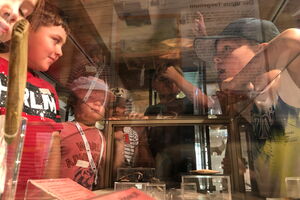
The museum, which is well worth a visit, exhibits archaeological finds and modern everyday objects from Eschenz. The archaeological tour from Eschenz to Stein am Rhein starts at the museum and leads to pile-dwelling sites from the Neolithic and Bronze Age on Werd Island. Several panels also provide information about the Roman settlement and the late antique fort of Tasgentium. The sites are situated in a fantastic landscape by the lake.
Unterdorfstrasse 14
8264 Eschenz
Museum für Archäologie des Kantons Thurgau
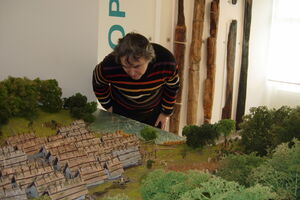
The Museum of Archaeology presents the most important archaeological discoveries from Canton Thurgau, including numerous outstandingly preserved objects from pile-dwelling sites, everyday objects from the Celts and Romans, and finds dating back to the Napoleonic War of 1799. The highlights include the Neolithic golden cup, the Roman wooden statue and the oldest completely preserved instrument in Switzerland: a 2000-year-old pan flute.
Freie Strasse 26
8510 Frauenfeld
Vaud
Musée cantonal d’archéologie et d’histoire
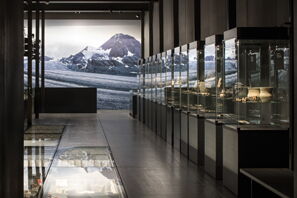
The museum's collections are extremely varied and reflect the work of archaeologists in the canton of Vaud since the 19th century. Among the highlights are archaeological finds from settlements on the shores of Lake Geneva and Lakes Neuchâtel and Morat. The permanent exhibition features an abundance of evidence of pile dwellings, in the form of a life-size reconstruction of a lake excavation and models of settlements. Visitors can also discover numerous well-preserved Neolithic and Bronze Age objects from well-known piledwelling sites such as Morges, Concise, Chevroux and Corcelettes.
Place de la Riponne 6
1005 Lausanne
Musée Yverdon et region
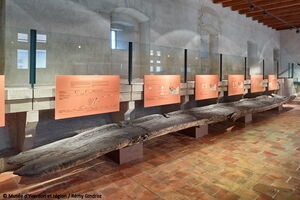
The prehistoric hall presents an array of finds from the pile-dwellings in north Canton Vaud, covering the entire period from the Late Stone Age (4000 BC) to the end of the Bronze Age (850 BC). The paintings by the Yverdon artist P. Savary of some of the finds being used in everyday situations provide a vivid impression of what life would have been like at the time. Particularly worth mentioning with regard to the Bronze Age finds is a dugout canoe – at 12 m one of the longest in Switzerland – which was found in Corcelettes (VD) in 1880.
Le Château, CP 968
1401 Yverdon-les-Bains
Zug
Kantonales Museum für Urgeschichte(n)

The Zug Museum für Urgeschichte(n) presents the history of the pile dwellers in a lively and informative manner. Here, you will see an exhibition that allows you to experience first-hand what people’s everyday lives were like 3000 to 6000 years ago. What did they eat? What craft-working skills and abilities did they have? What kind of clothes and jewellery did they wear? With whom did they trade goods? All these questions are answered by the finds on display.
Hofstrasse 15
6300 Zug
Zurich
Museum am Pfäffikersee
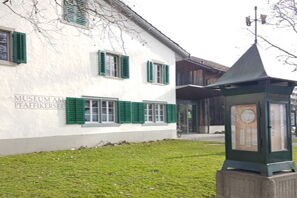
The museum documents housing and trade in the 18th and 19th centuries, home working and industrialisation, but also houses a rich prehistoric collection, including pile-dwelling finds from the northern shore of Lake Pfäffikon.
Stogelenweg 2
8330 Pfäffikon
Museum Wetzikon

Most of the pile dwelling objects come from Jakob Messikommer, a farmer and one of the leading figures in early pile dwelling research: from the smallest fish scale to stone axe blanks and grain mills. We have recreated some of these objects so that visitors can hold them in their hands or try them out.
Farbstrasse 1
8620 Wetzikon
Ortsmuseum Meilen
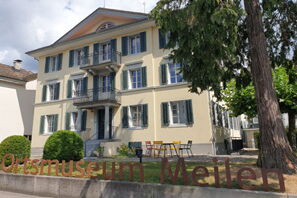
Pile-dwelling research began in 1854 with the finds in Meilen. In its permanent exhibition, the Meilen Local Museum shows archaeological discoveries from various lakeside settlements in the municipality. The exhibition covers topics such as construction, nutrition, everyday objects, movement, agriculture, vegetation and wildlife.
Kirchgasse 14, 8706 Meilen 14
8706 Meilen
Ortsmuseum Sust
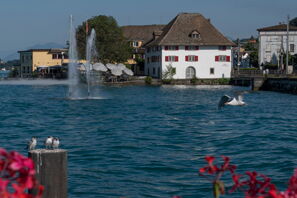
One focus of the newly renovated museum is archaeology. The new permanent exhibition will provide insight into how people lived in Horgen around 3000 BC. Until then, the museum invites visitors to discover Horgen's ancient past and try out the craft techniques of the pile dwellers at various events.
Bahnhofstrasse 27
8810 Horgen
Pfahlbauweg am Pfäffikersee
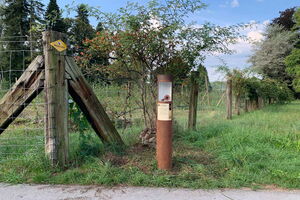
Explore the pile dwellings on a beautiful walk along Lake Pfäffikon. Ten stations along the 6.6 km route invite you to discover various aspects of life in those days. The trail is wheelchair and pram accessible, and the walking time is 1.5 hours. There are sanitary facilities, fire pits and bathing areas along the way, and in Pfäffikon and Auslikon there are also places to eat near the lake; the best spots are marked on the map. For small (and big) children, short stories from everyday life in the pile dwelling era invite them to immerse themselves in the past. At each location, there is a puzzle about the pile dwellings to solve.
The best starting points for the Pfahlbauweg trail are at station 10 in Wetzikon or station 1 in Pfäffikon. Other suitable starting points are station 8 in Seegräben and station 6 in Auslikon. We recommend travelling by public transport. More information can be found on the Pile Dwelling Trail website.
Wetzikon / Pfäffikon
Schweizerisches Landesmuseum

The archaeological collection comprises more than 100,000 objects from all Swiss regions. Important ensembles are the pile-dwelling finds from the Seeland Region of Victor Gross's Collection and those from Lake Zurich by Ferdinand Keller. An aesthetic presentation shows the fascinating world of pile-dwelling finds. On display are, for example, a Neolithic door, one of the oldest wheels in Europe and numerous objects made of leather or wood.
Museumsstrasse 2
8021 Zürich